
Alveary Foundations - English Update
The English section of our Foundations course has gotten a big update. Whether you're new to Charlotte Mason or looking to deepen your understanding of how to approach this subject, this section will give you a clearer picture of how all the pieces fit together.
What you'll find inside:
- Penmanship: How the Mason model approaches handwriting, from chalkboard work in the early years to the habit of visualization, and guidance on choosing a penmanship model that is both beautiful and practical.
- Dictation: How dictation works across the grades, including how to assess student readiness and how to give more responsibility to older students.
- Grammar: An overview of the grammar courses used in Grades 4-12 and how grammar study connects to composition in the upper years.
- Composition: How writing develops from oral narration in the early years through formal composition assignments in Grades 7-12.
- Recitation: The purpose and practice of recitation in a Mason education, with practical guidance on clear speaking, personal interpretation, and how to make practice meaningful rather than mechanical.
- Content Progression Charts: These are helpful resources as you plan with clear grade-by-grade breakdowns for penmanship, copywork, narration, composition, and recitation.
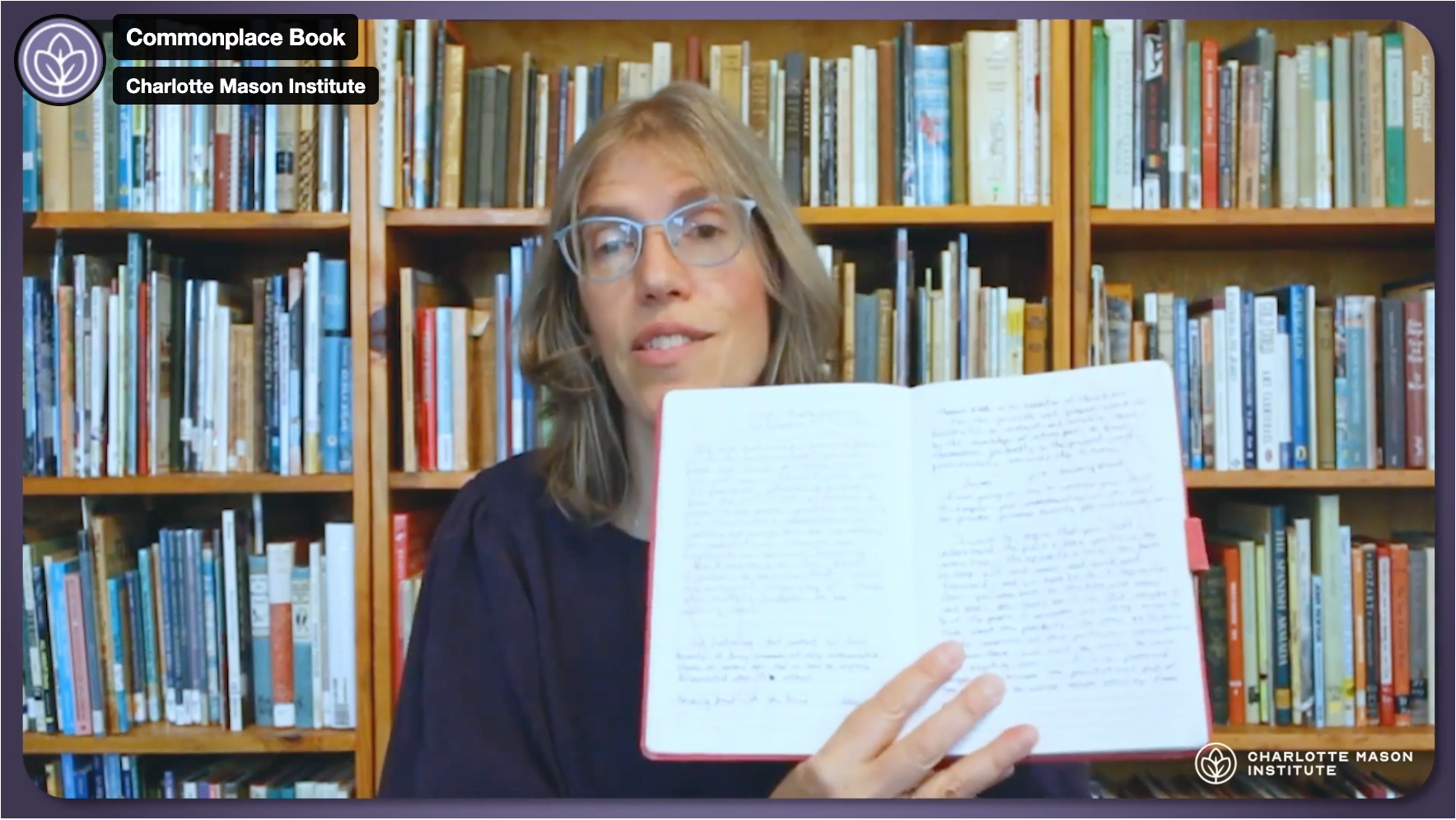
- Copywork & Commonplace Books: A walkthrough of how copywork is taught from Grade 1 through high school, and how students gradually transition to keeping their own Commonplace Book. Check out this video on Commonplace Books below:
We hope this section gives you a fuller picture of how English comes alive in a Mason education, not as a checklist of skills, but as a rich practice of reading, thinking, and communicating well. Head over to the Alveary Foundations Course to explore the new English section in Relational Methods. We look forward to sharing more updates next week!
Spotlight: Planning for the new year? The “Prepare your school year” section on your dashboard offers steps and tips for setting up your school year. Including a list of student resources you don’t want to forget! You can check things off as you go and head into the new year with confidence!
Notes:
- Syllabird Update: The Modern Language lesson plans have been enhanced in Syllabird. Now, you can either use the lesson plans in Syllabird with your printed notebooks or access each day’s resources separately through digital links in Syllabird. This will be available for both Spanish and French.
- French: We know many of you are eager to receive the French lesson plans. Due to extenuating circumstances they are delayed longer than anticipated. We sincerely apologize for the delay and hope to have them available next week. Thank you for your patience.
- Living Nature Reader Update: We are so excited to announce that the third and final volume of Walks with a Naturalist is now available here on Amazon! Volume 3 will be on the Grade 3 program in 2027-28, so those with younger children may want to hold off for now and enjoy Volumes 1-2 instead.
- Living Book Press Sale: Sale alert! 20% off all Living Book Press products & 50% off audiobooks! The sale begins June 29th and ends July 12th. Happy shopping!
- Faithfully Present: Thinking about joining us July 23-25 at Covenant College for the Faithfully Present Conference. There is still time to register and join us for a weekend of thoughtful speakers, meaningful conversations and practical encouragement. Register today!
Query: Why are the vocab cards not included in the Lower Spanish course this year?
We have not included vocabulary cards in the lessons for the 26-27 school year. We received feedback from many members that they were not using the vocab cards for various reasons—cumbersome to use, too much to print, hard to keep track of. We also disliked the "cartoonish" images and do not want to create a resource that is not aesthetically pleasing. Since it is a picture study lesson, the focus should be on the images in the book. The videos we include this year focus on TPR (Total Physical Response) and pointing to the pictures in the book as you learn the words and phrases. The goal for picture study is to talk about the picture using the narration phrases and vocabulary. Therefore, the best way to review is to have students describe the pictures in the book in the target language and leave out the English translation as much as possible. We hope you will find it helpful that there are less vocabulary words and a good amount of review. If vocabulary cards are helpful for your student, you can create some on index cards or create online ones on quizlet.com.
Have a wonderful 4th of July weekend!
